 Trang Chủ


Within the financial system, depositors represent a particularly critical segment of financial consumers, as they are not only users of financial services but also the primary source of funding for credit institutions. However, depositors often prove to be among the most vulnerable in cases of systemic risk, or due to limited financial literacy, information asymmetry, or misleading sales practices.
Deposit insurance organizations, which serve as the main line of defense for depositors, can consider integrating financial consumer protection principles into their operations. Doing so would not only strengthen the overall effectiveness of depositor protection but also align the deposit insurer’s role more closely with international standards and practices.
Financial Consumer Protection Principles Relevant to Depositor Protection
Currently, two internationally recognized documents on financial consumer protection are widely used around the world:
(1) The G20/OECD High-Level Principles on Financial Consumer Protection (2022), consisting of 12 principles, provide a comprehensive reference framework for governments in developing and promoting effective financial consumer protection policies; and
(2) The World Bank's Good Practices for Financial Consumer Protection (2017) provides a comprehensive assessment and reference tool to help policymakers identify issues in financial consumer protection and offer good practices based on international experience to improve legal and supervisory frameworks for consumer protection.
Based on international research, several financial consumer protection principles have been identified as playing an important role in depositor protection, including:
(i) Legal and regulatory framework and supervision;
(ii) Transparency and disclosure;
(iii) Fair treatment;
(iv) Deposit insurance mechanisms; and
(v) Financial education.
The key contents of these principles are as follows:
Legal and regulatory framework and supervision: Regarding this principle, the World Bank and G20/OECD recommend:
On the legal framework: “Financial consumer protection should be an integral part of the legal, regulatory, and supervisory framework”; “countries should have a clear and comprehensive legal framework that sets out specific standards for the protection of consumers of financial products and services.”
On the scope of protection: “The legal framework for financial consumer protection should adequately cover all types of financial products and services.”
On supervisory mechanisms: “Regulatory and supervisory authorities should be provided with an appropriate and flexible set of legal tools that enable them to respond to emerging risks as needed, including changes in the regulatory perimeter. Financial service providers and financial intermediaries should be regulated and/or supervised in a manner that is appropriate to the risks they pose and the markets they serve.”
Transparency and disclosure: The disclosure of full information on prices, key features, terms of transactions, and risks associated with financial products and services is a prerequisite for consumers to compare and choose products that meet their needs. The World Bank's Good Practices for Financial Consumer Protection emphasize the importance of objectivity, brevity, use of plain language, standardization, and timing of disclosures. Disclosure requirements are often among the first legal reforms implemented by countries to enhance financial consumer protection.
Fair treatment: Fair treatment of consumers is a core component of financial consumer protection. Principle 3 of the G20/OECD High-Level Principles on Financial Consumer Protection affirms that "all financial consumers should be treated equitably, honestly and fairly at all stages of their relationship with financial service providers." The World Bank's Good Practices for Financial Consumer Protection also emphasize the requirement to ensure product suitability, meaning that the products recommended to consumers should be suitable for their individual circumstances and needs. Financial consumer protection frameworks should include provisions to minimize the risk that the interests of consumers (e.g., being treated fairly, not being mis-sold financial products, etc.) may conflict with those of the financial service providers or their employees (e.g., recommending unsuitable products or engaging in aggressive sales practices due to commission incentives).
Deposit insurance mechanism: According to the World Bank’s Good Practices for Financial Consumer Protection (2017), specifically regarding deposit services and products, the Bank recommends that a deposit insurance mechanism should be in place within the financial safety net to protect depositors in the event that a financial institution is unable to fulfill its obligations, including the repayment of deposits to customers.
Financial education: Principle 4 – Financial Education and Awareness (G20/OECD High-Level Principles on Financial Consumer Protection) recommends that: "Relevant stakeholders should promote financial education and awareness as part of a comprehensive financial inclusion and/or financial education strategy. Appropriate mechanisms should be developed to equip consumers with the knowledge, skills, behaviors, and attitudes necessary to be aware of and understand financial risks and opportunities, to make informed choices, to know where to seek help, and to take effective action. These mechanisms may also include initiatives to improve digital financial literacy, increase awareness of cyber risks, and promote safe online and digital transactions."
The Current State of Depositor Protection by the Deposit Insurance of Vietnam in Line with Financial Consumer Protection Principles
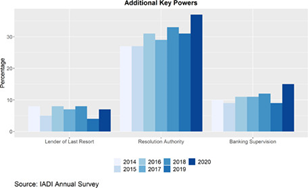
The deposit insurance mechanism is primarily established to protect depositors. However, in practice, most of the functions of deposit insurance organizations—both globally and in Vietnam—focus more on ensuring the safety and soundness of insured institutions rather than directly protecting depositors. A considerable gap remains between the actual role of the DIV in protecting depositors and the principles of financial consumer protection.
Regarding the legal and supervisory framework, the Law on Deposit Insurance clearly defines the responsibilities, powers, and insurance coverage of DIV. However, the scope of DIV's protection remains limited to traditional individual deposits at CIs and does not extend to deposits by organizations or other types of non-bank financial institutions. Meanwhile, digital financial products such as e-money (e-wallets, prepaid cards) and online/mobile financial services are becoming increasingly popular, but they currently lack an appropriate protection mechanism. Furthermore, DIV is not assigned responsibility for supervising or inspecting issues related to deposits and depositors, and therefore cannot intervene to protect depositors in cases where they are misadvised or mis-sold deposit products.
In terms of transparency and disclosure, the Law on Deposit Insurance stipulates that insured institutions must publicly post a copy of their Deposit Insurance Certificate at all deposit-taking transaction points and prescribes the required information on the certificate. However, there is no regulation requiring bank staff to clearly explain and ensure that customers fully understand whether a product is insured before entering into financial transactions. There is also no requirement for insured institutions to display information about deposit insurance on their websites or mobile applications. In addition, insured institutions should be required to provide accurate and timely information about deposit insurance to customers at all appropriate points in time—before, during, and after entering into deposit agreements—to support well-informed decisions.
For digital financial products distributed by payment intermediaries or Fintech companies, there are currently no regulations requiring these companies to disclose information clarifying that such products are not covered by deposit insurance.
Regarding fair treatment, depositors can access information about deposit insurance through DIV or insured institutions. However, when making deposit decisions, they largely rely on the information provided by advisors or bank staff. Currently, only the ethical standards for advisors (as stipulated in Circular No. 38/2024/TT-NHNN on advisory activities of credit institutions and foreign bank branches) require that the advice provided must align with the customer's goals and needs. However, there are no regulations for external supervision of such advisory activities beyond the internal processes of CIs, nor are there penalties for failing to provide or providing incorrect or insufficient information about deposit insurance.
When depositors face difficulties or disputes related to their deposits, they often do not receive adequate legal support or advice, which puts them at a disadvantage in understanding and protecting their legitimate rights.
Regarding the deposit insurance mechanism, with a current coverage limit of VND 125 million, DIV ensures full protection for over 92% of depositors in the banking system. While this figure is within the range recommended by the IADI for full protection—between 90% and 95%—it remains relatively low compared to regional and international standards. It may not be sufficient to reassure the public in the event of mass withdrawals. The current timeframe for insurance payout is 60 days, which is quite long compared to the IADI recommendation of 7 days or the practices of many countries that can pay out as early as the first weekend following closure.
Additionally, the Law on Deposit Insurance does not yet contain provisions related to DIV's new mandates, which have caused difficulties in implementation, especially regarding responsibilities in special control and resolution of weak credit institutions.
Regarding financial education, although DIV has made significant progress in raising public awareness of the deposit insurance policy, there are still several challenges, including:
(i) The Law on Deposit Insurance does not authorize DIV to conduct financial education activities, so DIV's communication efforts remain limited to the dissemination of the deposit insurance policy and legal provisions;
(ii) It remains challenging to help depositors understand and protect themselves against fraud in financial transactions, especially in the context of rapidly evolving and widely adopted new financial products; and
(iii) There are no regulations requiring credit institutions to coordinate with DIV in disseminating information about the deposit insurance policy.
Solutions to Enhance the Role of the Deposit Insurance of Vietnam in Protecting Depositors in Accordance with Financial Consumer Protection Principles
Financial consumer protection is a key task emphasized in documents such as the National Strategy for Financial Inclusion to 2025, with orientations to 2030, the Action Plan for Implementing the National Strategy for Financial Inclusion to 2025, with orientations to 2030, for the banking sector, and the Project on the Development of Non-Cash Payments. Within these frameworks, the DIV is assigned the primary responsibility of formulating the Development Strategy for Deposit Insurance to 2025 with orientations to 2030, in line with the Development Strategy of the Banking Sector. In addition, the DIV is expected to coordinate with relevant units to carry out other tasks such as improving the legal framework, promoting financial education and awareness, and protecting financial consumers. Therefore, in order to better protect the rights and interests of depositors in accordance with financial consumer protection principles, several solutions can be considered:
Firstly, strengthen the legal framework and supervisory mechanism by expanding the scope of deposit insurance to cover electronic money products and enhancing the supervisory function of the DIV with respect to deposits and depositors. Specifically:
Regarding the scope of deposit insurance, the DIV may study amendments to the Law on Deposit Insurance to expand insurance coverage to electronic money products such as e-wallets and prepaid cards.
In the short term, the DIV could explore the expansion of insurance coverage to include identified prepaid cards issued by banks or foreign bank branches. As for anonymous prepaid cards, due to the inability to identify customer information, the DIV would not provide insurance protection for these products.
In the medium to long term, the DIV could explore the possibility of expanding its membership base to include non-bank institutions that offer e-wallet services. This solution presents various challenges, including the regulatory and supervisory mechanisms for non-bank entities, the collection and management of customer data, and the role of the DIV in the event of a failure of a non-bank e-wallet provider.
The DIV could also consider expanding insurance coverage to e-wallet products through a pass-through mechanism. Based on the experience of the United States and Canada, implementing this solution would require the DIV to amend the Law on Deposit Insurance and clearly disclose the associated conditions, as well as the applicable insurance limits in each specific case.
Regarding the supervisory mechanism, since Vietnam does not yet have an official agency dedicated to financial consumer protection, the DIV could consider studying and proposing the expansion of its functions to include the management, supervision, and inspection of activities related to advisory services, information provision, and fair treatment of depositors and their deposits by credit institutions.
Secondly, promote transparency and information disclosure through the following measures:
The DIV could propose amendments to include deposit insurance information under Article 21 of Circular No. 48/2018/TT-NHNN on public disclosure or Article 6 of Circular No. 49/2018/TT-NHNN on term deposit agreements.
The DIV could study the issuance of regulations regarding the requirement to post information related to deposit insurance publicly. Accordingly, information such as whether a product is covered by deposit insurance and the applicable insurance limits must be clearly stated in advertising materials issued by member institutions. Consulting staff must obtain confirmation from customers that they have understood the information, and member institutions must adhere to disclosure procedures at all stages, both before, during, and after a transaction.
Service providers must clearly and transparently notify customers if a product is not covered by deposit insurance. This notice should be prominently displayed on the application interface, website, or in related documents using plain and clear language to avoid misleading users.
Thirdly, ensure the fair treatment of depositors:
The DIV can coordinate with insured institutions to train their consulting staff, ensuring that they provide accurate, complete, and transparent information to depositors. The DIV should also be authorized to inspect whether credit institutions have internal procedures in place for deposit advisory activities.
The DIV could study the implementation of free legal consultation services or legal assistance for depositors in cases of disputes, through various channels such as hotlines, emails, or in-person consultations, ensuring timely access to support.
Fourthly, enhance the deposit insurance mechanism by raising the coverage limit, shortening the payout period, and actively participating in the resolution of weak credit institutions.
Fifthly, strengthen financial education and improve financial capability for the public through educational programs targeting all population groups, the provision of financial product information and user guides, and the application of digital platforms to enhance the effective dissemination of financial information. The communication reach should also be expanded to include potential depositors.
In addition, the DIV could propose to the IADI the inclusion of content related to financial consumer protection principles in its Core Principles for Effective Deposit Insurance Systems. These principles should include, but not be limited to: (i) Legal and supervisory frameworks; (ii) Transparency and information disclosure; (iii) Fair treatment; and (iv) Financial education. Notably, the introduction to the Core Principles should reference the following two key international documents as applicable standards: (1) The G20/OECD High-Level Principles on Financial Consumer Protection and (2) The World Bank's Good Practices for Financial Consumer Protection.
Communication Department (Translation)